
4852 S 1900 W, Roy, UT 84067
385.233.4886
Paskett Auto Roy Utah

Paskett Auto

  • Auto Repair
    • General Repair
    • Engine Repair
    • Heating & Cooling
    • A/C Service & Repair
    • Suspension
    • Brakes
  • Maintenance
    • Emissions
    • Alignment
  • Tires
  • About Us
    • Blog Page
  • Specials
  • Contact Us

Are Snow Tires Worth It? 3 Important Things To Know

Home|Archives forAuto Repair

Winter is officially here, and in Utah, that means snow and a lot of it! Snow can be fun to play in and it is certainly beautiful to look at. However, it can also be dangerous to drive in. Luckily the invention of snow tires has made driving in the winter easier and much safer. However, many people wonder whether snow tires are truly worth it, especially if it doesn’t snow much where they live. Continue reading to learn more about snow tires and our perspective on whether they are worth it.

All About Snow Tires

Snow tires often referred to as winter tires in the automotive industry, have a long and interesting history. For a little background, snow tires were first invented by Nokian in Finland in 1934 for weather-resistant trucks. The invention of these revolutionary tires was to allow goods to be transported year-round. Just two years later, in 1936, a snow tire was modified for passenger vehicles, and the world hasn’t been the same since. It is even required in many European countries to have snow tires on your vehicle if you plan on driving during the winter.

Great Traction
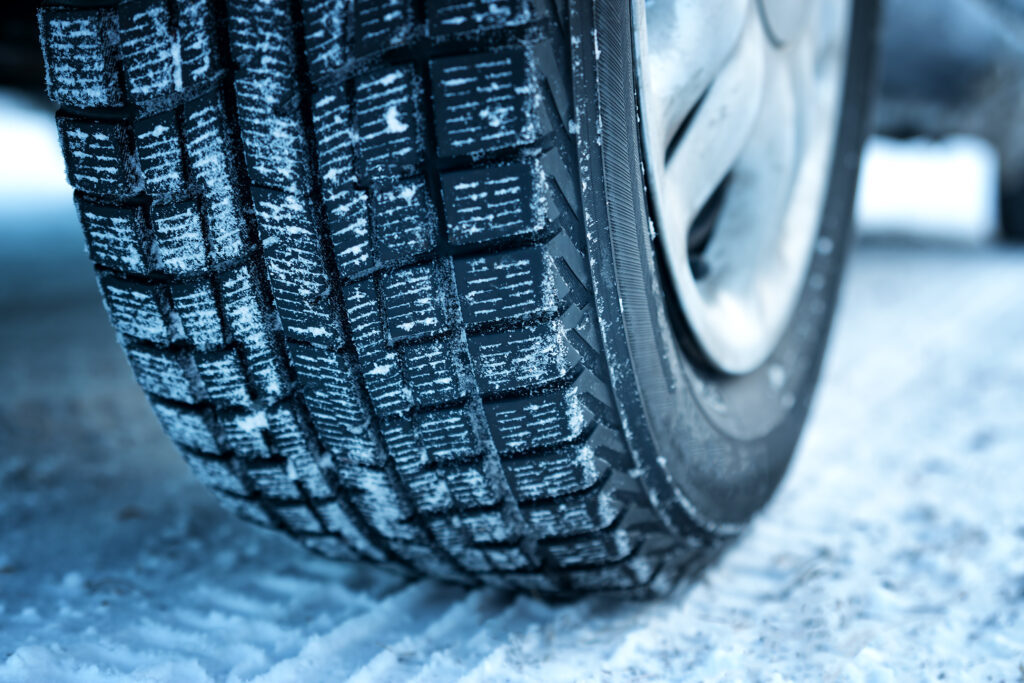
snow tires

One of the most common misconceptions about winter tires is that they are only useful in the winter because they provide traction in the snow. Firstly, yes this is an excellent benefit of winter tires. Traction is a great benefit because it keeps your vehicle from the dangerous situation of slipping when you drive in the snow. Secondly, the traction provided by winter tires extends past snow and also helps with keeping your tires connected to icy surfaces, wet surfaces, and dry surfaces.

Supports Your Brakes

Another reason why snow tires might be worth it is that they can help your vehicle brake much quicker. This is very important in the winter because ice and snow can lead to slips when you brake. Cars brake up to 30% faster with snow tires than with regular tires in the winter. So if you are concerned about your vehicle’s ability to slow down on snowy days, snow tires might be a good choice for you.

The Cold Affects Tire Compounds

One problem with summer tires is that as the cold rolls in, they begin to harden and become less elastic. This can be problematic for people who are driving in the winter because stiff, unyielding tires will not be able to grip the pavement as well. This can make braking and steering more laborious and can even be dangerous for the driver and the passengers.

Are Snow Tires Worth It?

While US citizens are not obligated to have snow tires on their vehicles, they can certainly be a great help. Snow tires offer many different benefits including better traction, easier braking during the winter, and a safer drive for everyone involved. However, snow tires can be an expensive addition to your vehicle and they may be unnecessary depending on where you live. The answer to the question of whether snow tires are worth it is yes– if you live in a cold, snowy part of the country.

Do You Want To Get Winter Tires Attached To Your Vehicle?

If you are interested in getting winter tires, feel free to give us a call here at Paskett Automotive. We can help you choose the perfect winter tires and get them affixed to your vehicle in no time. Our maintenance and repair team is talented, experienced, and passionate about helping our customers keep their tires and vehicles in the best condition possible. For more information or to get in contact with our company, feel free to reach out to us today.

Filed Under: Auto Repair

There are many reasons why cars have difficulty accelerating. That is why it is important to have access to a quality automotive repair company. We at Paskett Automotive make it our business to help car owners keep their vehicles in the best condition possible and help them determine when something is not quite right. That is why we have compiled a list of reasons why cars have difficulty accelerating. Continue reading to learn more.

Why Cars Have Difficulty Accelerating

The Fuel Filter Is Broken

The most common reason why cars have difficulty accelerating is due to a broken or filthy fuel filter. Your fuel filter is responsible for keeping your fuel system clean. Without your fuel filters, your fuel system would not be able to function properly. Therefore, when a fuel filter is broken or gets clogged, your fuel system has to work harder to provide your engine with the proper amount of fuel. The inconsistent supply of fuel to the engine can result in slow acceleration. Fortunately, fuel filters are easily replaced and cleaned. So, if you are in need of a new fuel filter, feel free to reach out to us at Paskett Automotive.

A Faulty Fuel Pump

difficulty accelerating

Another car part that is in your fuel system is your fuel pump. The fuel pump is an integral part of your vehicle that ensures that fuel gets into the engine. Fuel pumps have electric motors that drive fuel into the engine. Fuel pumps are typically found in the fuel tank. If there is a problem with the fuel pump, it may not be able to provide the proper fuel to the engine, therefore making it difficult for your car to accelerate. Come into our shop here at Paskett Auto if your car has problems accelerating and we will determine whether your car has a faulty fuel pump.

Temporary Acceleration Issues

If you only experience acceleration issues once and a while, you may be experiencing temporary acceleration issues that are not associated with any mechanical or electrical problems. Examples of times when vehicles may have a hard time accelerating are as follows.

Higher Altitude

If your vehicle has an especially hard time increasing speed when you are driving uphill or when you’re on an incline, it could be due to the altitude. Reduced air density, oxygen, and nitrogen can result in less power. You can combat this by simply keeping your air filters and fuel injectors clean and remembering that you will need more power to drive up a hill.

A Stuck Emergency Brake

Many people find that they only experience difficulty accelerating after turning on their vehicle and turning off the emergency brake. Sometimes, emergency brakes can get stuck halfway engaged, causing them to drag when you press the gas. This can cause your car to accelerate more steadily and can cause damage to your brakes and brake pads. To fix this problem, you can just fully release the emergency brake. However, you may need to take your car into the mechanic to make sure that there has not been any damage to your brakes.

An Object Under The Pedal

Lastly, a very common reason why cars have a hard time accelerating is because of an object getting stuck underneath the gas pedal. If a water bottle, marble, or stray piece of litter gets under your gas pedal, you will have a much harder time accelerating.

Do You Need Vehicle Maintenance?

If your car has difficulty accelerating, you may want to bring it to us at Paskett Auto. We can quickly and efficiently determine what the cause of this problem is and fix it immediately. Oftentimes, vehicles simply need a little maintenance to get working right. Our mechanics here at Paskett Auto are knowledgeable about all sorts of vehicles and the common issues that these vehicles have. That is why we would be your best choice for vehicle maintenance. Feel free to reach out to us today for more information or to set up an appointment.

Filed Under: Brakes, Auto Repair, Engine Repair

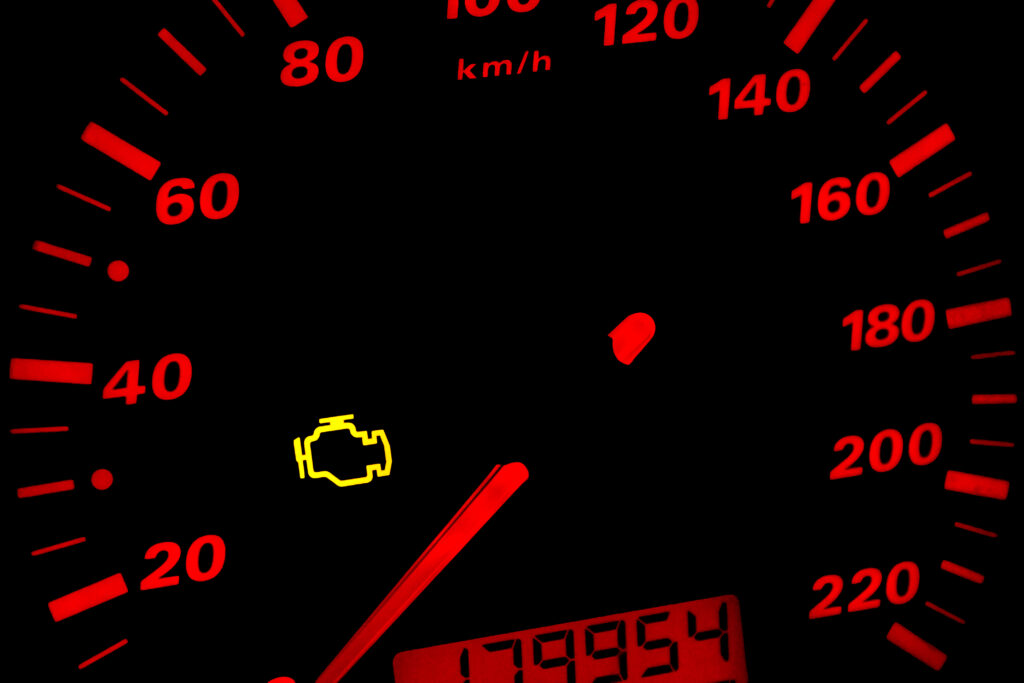
You are driving down the street, yelling out the lyrics to your favorite song that’s on the radio when suddenly a little yellow light that is shaped sort-of like a box with three “T” shaped protuberances coming from it appears on your dashboard. This light is commonly known as the check engine light but is also sometimes referred to as the malfunction indicator lamp (MIL). 

The check engine light is important because it receives messages from the engine’s computer when something may be wrong. While the check engine light shows that there is a problem, it does not tell you exactly what the problem is, which is why it is important to take your car into the mechanic as soon as possible after the check engine light has come on. If you need to get your engine checked out, feel free to reach out to us at Paskett Automotive.

check engine light

Emissions/Exhaust System

The most frequent reason why your check engine light will come on is due to a problem with your emissions and exhaust system. You can have a leak in your exhaust pipes or there could be an issue with your catalytic converter. Your vehicle’s mass airflow sensor may have also been tripped on, as it is easily flipped.

Loose Fuel Cap

Another thing that may cause the check engine light to turn on would be a loose fuel cap. If you are not paying attention to screwing your fuel cap on completely after you fill up your car’s tank with gas, then you will likely find the malfunction indicator lamp when you get back into the car, or shortly thereafter. Luckily, there is a quick fix for this problem. Simply replace the cap and tighten it properly.

Electrical System

Because the check engine light is a catch-all for car issues, it very well may turn on due to an electrical problem. There are many wires within your car connecting the battery, spark plugs, ignition system, and many other parts together to all your car to work properly.  If the electrical system is not firing correctly, it may indicate to the engine’s computer system that something is wrong, notifying your check engine light. 

Oil Is Low

If your engine is running out of oil, your check engine light may turn on to warn you. If your engine runs out of oil, then your engine will begin to malfunction and begin performing poorly. If your oil is contaminated, it can also lead to certain problems. A leak may also be present in your fluid system if the check engine light comes on.

Oxygen Sensor

While there are still many other reasons why your check engine could be turning on, the last common reason is an issue with the oxygen sensor. The oxygen sensor is a crucial component of your emissions system that is installed to track exhaust leaks. The sensor will message the check engine light if there is an exhaust problem or if the sensor itself is having issues.

Has Your Check Engine Light Come On Recently?

Clearly, there are many possible reasons why your check engine light could be coming on. That is why it is important to see a mechanic if your check engine light comes on at any point. We at Paskett Automotive offer repair and maintenance services to our clients for all sorts of different automotive problems. From engine issues, to tire problems, to simple diagnostic checks, we at Paskett Automotive have got you covered. If you are living in the Layton, UT area and your check engine light comes on or you are in need of a vehicle tune-up, feel free to reach out to us today.

Filed Under: Auto Repair

  • « Previous Page
  • 1
  • …
  • 10
  • 11
  • 12
  • 13
  • 14
  • …
  • 16
  • Next Page »

Paskett Auto

4852 S 1900 W
Roy, Utah, 84067
385.233.4886
Monday - Friday 8:00 am - 5:30 pm
Saturday - 8:00 am - 3:00 pm

OFFICE

4852 S 1900 W
Roy, Utah, 84067
385.233.4886
Monday - Friday 8:00 am - 5:30 pm
Saturday - 8:00 am - 3:00 pm

Contact Us

NAVIGATION

AUTO REPAIR
TIRES
SPECIALS
ABOUT US
CONTACT US

STAY CONNECTED

Twitter

2026Paskett Auto | All Rights Reserved | Privacy Policy | Terms | XML Sitemap | Sitemap | Accessibility | Anti-Discrimination | Site by PDM